MemoHoney Official Website › The Memory Supplement Guide
The Memory Supplement GuideThe Memory Supplement Guide: How To Read A Shelf Of Thirty Bottles
Four things have randomised evidence for cognition, and none of them is sold in a bottle.
Hearing treatment, blood pressure control, sleep and exercise. That is the honest starting point for this category, and everything on the supplement shelf is aiming at a smaller effect than any of them. This guide sets out what is actually on that shelf and what each group has behind it.
Written for somebody standing in front of thirty bottles with no way to tell them apart, and useful even if the conclusion is to buy none of them.
The four things with the best evidence
Treating hearing loss
The ACHIEVE trial randomised nearly a thousand older adults to hearing intervention or health education. In the group at highest risk, cognitive decline over three years was roughly 48 per cent slower. That is the largest effect anybody has produced in this field and it involves a hearing aid.
Controlling blood pressure
SPRINT MIND compared intensive with standard blood pressure targets and reported a lower rate of probable dementia in the intensive arm. A prescription and a blood pressure cuff, not a capsule.
Sleeping properly
Memory consolidation happens during sleep. The mechanism has decades of work behind it, and short sleep degrades exactly the kind of recall people come to this shelf about.
Moving
Physical activity is the intervention that shows up in every risk model for cognitive decline, and it is free. It is also the one nobody wants to hear about, which is a large part of why this shelf exists.
Stating those four first is not an argument against buying a supplement. It is an argument for buying one with the right expectation, which is a small effect on top of the things above rather than instead of them.
What is actually on the memory supplement shelf
| Group | Typical names | What the evidence looks like | What to watch |
|---|---|---|---|
| Botanicals | Bacopa monnieri, ginkgo biloba, panax ginseng, rhodiola | Bacopa has meta-analyses behind it; ginkgo has a six-year trial in 3,000 adults that found no reduction in dementia incidence | Standardisation. An extract varies batch to batch unless the marker compound is stated |
| Amino acids and nitric oxide precursors | L-arginine, L-citrulline, arginine AKG, beta-alanine | Strong for blood flow and exercise; one cerebrovascular measurement during sprint training | The studied amounts are grams a day; a once-daily capsule carries milligrams |
| Vitamins and minerals | B complex, a daily multivitamin, magnesium | A randomised trial in over 3,000 adults found a small memory improvement; observational work on B vitamins reports associations | Upper intake levels. Niacin's is 35 mg a day and several products stack |
| Phospholipids and cholinergics | Citicoline, alpha-GPC, phosphatidylserine | A mixed literature with some positive trials and considerable heterogeneity | Amounts, and how much of the trial dose the format can carry |
| Sold as nootropics | Racetams, centrophenoxine, unlisted compounds | An analysis published in 2022 found an unapproved drug inside products sold in the US as supplements | Everything. If the compound is a drug, the bottle is not a supplement |
Grouped by what the ingredient is, because that predicts the evidence better than the marketing category does.
Why amino acids turn up on memory labels at all
It surprises people, and the reasoning is more coherent than it looks.
Arginine is the substrate an enzyme converts into nitric oxide, and nitric oxide relaxes the muscle around a blood vessel. A relaxed vessel is a wider vessel. The inference is that better-supplied tissue works better, and the brain is tissue.
Citrulline appears alongside arginine because most swallowed arginine is broken down before it reaches the circulation, which the stable-isotope work quantified. Citrulline avoids that and converts to arginine at the kidney, so gram for gram it is the better precursor.
Where the chain gets thin is the last link. Blood flow is measurable and memory is measurable, and almost nobody has measured both in the same people on the same product. The nearest attempt is one 2025 trial at 8.8 g a day during sprint intervals in trained participants.
The six questions worth asking about any bottle
- Is every ingredient named, or is there a blend total?
- Is there an amount beside each name, and how does it compare with the trials?
- Can the format physically hold those amounts?
- What population were the trials run in, and what did they measure?
- How long is the refund window, and when does it start?
- Does buying it create an order record somebody can search?
The full checklist works through eight of these in detail, and scores this counter's own product against them in public.
When a memory change needs an assessment rather than a capsule
The single most useful thing this guide can say is the thing least likely to sell anything.
Ordinary memory complaints vary. They are worse when you are tired, better after a holiday, and they do not get steadily worse month on month. That pattern is what this shelf is aimed at.
A different pattern belongs in a consulting room, and waiting is the cost of getting it wrong.
Other people noticing before you do. The same conversation being repeated within a day. Familiar routes becoming confusing. Difficulty with tasks that were routine a year ago. A change that has worsened steadily rather than varying. Any of these belongs in an assessment, and nothing on this website is a reason to delay one.
MedlinePlus keeps a plain-language page on memory and the NCCIH publishes guidance on using supplements sensibly. Both are worth reading before spending anything.
Sources for this guide
- Lin FR, Pike JR, Albert MS, et al. Hearing intervention versus health education control to reduce cognitive decline in older adults with hearing loss in the USA (ACHIEVE): a multicentre, randomised controlled trial. Lancet. 2023;402(10404):786-797. PMID 37478886. https://pubmed.ncbi.nlm.nih.gov/37478886/
- Williamson JD, Pajewski NM, Auchus AP, et al. Effect of Intensive vs Standard Blood Pressure Control on Probable Dementia: A Randomized Clinical Trial. JAMA. 2019;321(6):553-561. PMID 30688979. https://pubmed.ncbi.nlm.nih.gov/30688979/
- Yasser E, Ayache L, El Khayat H, et al. Sleep and memory consolidation: Neural and cognitive perspectives. Prog Brain Res. 2026;299:137-176. PMID 42547206. https://pubmed.ncbi.nlm.nih.gov/42547206/
- Yeung LK, Alschuler DM, Wall M, et al. Multivitamin Supplementation Improves Memory in Older Adults: A Randomized Clinical Trial. Am J Clin Nutr. 2023;118(1):273-282. PMID 37244291. https://pubmed.ncbi.nlm.nih.gov/37244291/
- Baker LD, Manson JE, Rapp SR, et al. Effects of cocoa extract and a multivitamin on cognitive function: A randomized clinical trial. Alzheimers Dement. 2023;19(4):1308-1319. PMID 36102337. https://pubmed.ncbi.nlm.nih.gov/36102337/
- DeKosky ST, Williamson JD, Fitzpatrick AL, et al. Ginkgo biloba for prevention of dementia: a randomized controlled trial. JAMA. 2008;300(19):2253-62. PMID 19017911. https://pubmed.ncbi.nlm.nih.gov/19017911/
- Li A, Li H, Chen J. The effects of L-citrulline supplementation on cerebrovascular function during sprint interval training in taekwondo athletes. J Exerc Sci Fit. 2025;23(3):222-228. PMID 40474881. https://pubmed.ncbi.nlm.nih.gov/40474881/
- Mariotti F, Petzke KJ, Bonnet D, et al. Kinetics of the utilization of dietary arginine for nitric oxide and urea synthesis: insight into the arginine-nitric oxide metabolic system in humans. Am J Clin Nutr. 2013;97(5):972-9. PMID 23535108. https://pubmed.ncbi.nlm.nih.gov/23535108/
- Chen Q, Huang J, Shi X, et al. Associations between dietary B vitamin intakes and cognitive function among elderly individuals: An observational study. Nutrition. 2025;134:112716. PMID 40056822. https://pubmed.ncbi.nlm.nih.gov/40056822/
- Cohen PA, Avula B, Khan I. The unapproved drug centrophenoxine (meclofenoxate) in cognitive enhancement dietary supplements. Clin Toxicol (Phila). 2022;60(10):1156-1158. PMID 35959800. https://pubmed.ncbi.nlm.nih.gov/35959800/
- Using Dietary Supplements Wisely. National Center for Complementary and Integrative Health, National Institutes of Health. https://www.nccih.nih.gov/health/using-dietary-supplements-wisely
- Memory. MedlinePlus, U.S. National Library of Medicine. https://medlineplus.gov/memory.html
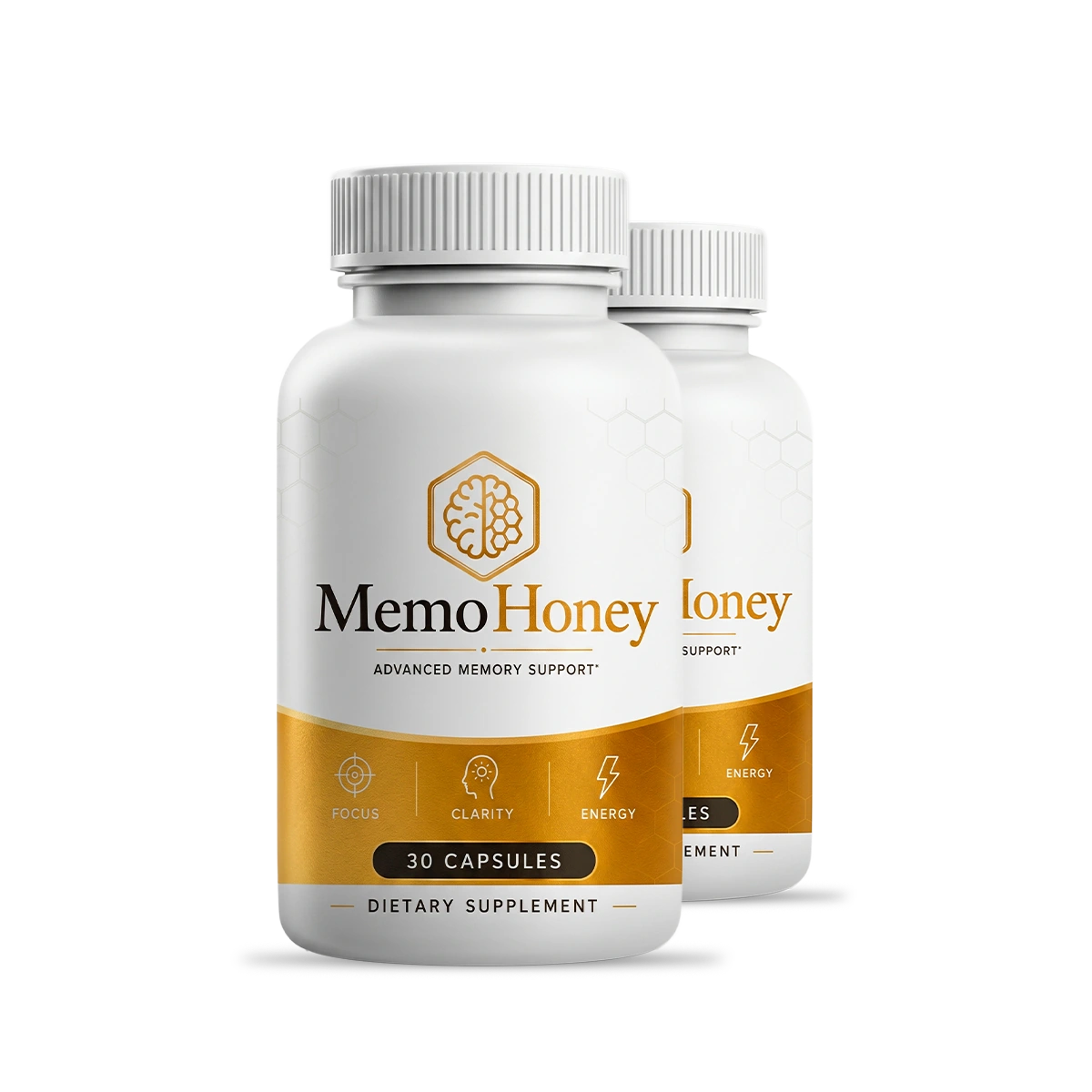
Order MemoHoney with the category in perspective
A daily capsule aiming at a small effect, on top of sleep and movement rather than instead of them, with 60 days from purchase to decide.
Two bottles $158 · six bottles $294 · 60-day money-back guarantee
Order MemoHoney From This CounterLot MEM-26/ME-4192 · one a morning, 30 to a bottle · ships from the United States