MemoHoney Official Website › How MemoHoney Works
How MemoHoney WorksHow Does MemoHoney Work? The Nitric Oxide Pathway, And Where It Stops
The argument behind this bottle is circulatory rather than neurochemical.
Four of the seven lines on the panel feed one pathway: the body turns arginine into nitric oxide, nitric oxide relaxes the muscle around a blood vessel, and a relaxed vessel carries more blood. Niacin and beta-alanine work on separate mechanisms. No trial has tested the combination, and the label prints 600 mg across those four lines where single-ingredient trials used grams.
This page follows the pathway from the capsule to the bloodstream, names the single study that measured anything in the brain, and marks the point where evidence turns into inference.
The pathway the MemoHoney formula is built on
Arginine is the only substrate the enzyme accepts
Nitric oxide synthase converts L-arginine into nitric oxide and citrulline. There is no alternative input. Every nitric-oxide supplement on the market is therefore a way of getting more arginine into the blood, and the differences between them are differences of delivery.
Most swallowed arginine never arrives
Arginase in the gut wall and the liver breaks down a large share of an oral dose on the way through. The stable-isotope study followed a labelled dietary dose and quantified how little of it reached nitric oxide synthesis. This is the single fact that shapes the whole category.
Citrulline goes round the obstacle
Citrulline is absorbed intact and converted to arginine in the kidney, bypassing the first-pass losses entirely. A human availability study measured the rise; a 2026 characterisation traced the conversion step by step. Gram for gram it is the better precursor, which is why it is on the label twice, at 100 mg a line.
A wider vessel carries more blood
Nitric oxide relaxes vascular smooth muscle, the vessel widens and flow rises. That is the effect the blood-pressure literature measures: a 2019 review of oral arginine and citrulline and a 2025 meta-analysis both report modest reductions in systolic pressure at gram-scale amounts, against the 600 mg this label prints across its arginine and citrulline lines.
What MemoHoney does about the brain specifically
This is the part of the argument that carries the weight, and it rests on one study. A 2025 trial in the Journal of Exercise Science and Fitness gave L-citrulline at 8.8 g a day for five days and measured cerebrovascular function during sprint interval training. It found a measurable effect on cerebral blood flow.
Three things about that study are worth stating alongside the result. It was done during hard exercise rather than at rest. Its participants were trained rather than people complaining about memory. And its dose, 8.8 g a day, is forty-four times the 200 mg of citrulline this label prints.
Nothing in that makes it a bad study. It makes it a study about a different question, and the honest position is that the brain-blood-flow link in this category is one paper deep.
Blood flow rising is measurable. Memory improving is measurable. Nobody has measured both in the same people on this formula, so the step between them is an inference rather than a finding. This site says so on the page where the question is asked, rather than attaching a caveat to every sentence.
The two MemoHoney ingredients that work on something else
Niacin, and cellular energy
The body converts niacin into NAD and NADP. Those two molecules are the electron shuttles of energy metabolism, and a neuron runs on them exactly as every other cell does. Run short badly enough and the result is pellagra, whose third classical symptom is dementia: the firmest link anywhere between a B vitamin and cognition. A Chicago cohort found higher dietary intake tracked with lower Alzheimer's incidence; a 2025 observational study reported similar associations across the B group. Both are associations rather than trials. The label prints 7.5 mg NE, 47% of the Daily Value.
Beta-alanine, and carnosine
Carnosine is two amino acids joined together and beta-alanine is the half that runs out first, so supplying it is what raises tissue carnosine. A randomised trial in adults aged 60 to 80 at 2.4 g a day moved a hippocampal imaging measure, which is the only brain result in this cast. A 2025 trial of carnosine itself improved cognitive outcomes in the younger half of its sample, at 2 g a day, and that is a different compound. The label prints 40 mg of beta-alanine.
What MemoHoney does not do, mechanically
A clear mechanism invites people to fill in the gaps, so it is worth naming the things this pathway is not.
- It is not cholinergic. Nothing here inhibits acetylcholinesterase, which is how the prescription drugs for Alzheimer's disease work
- It is not a stimulant. There is no caffeine, no theacrine and no synephrine on this label, so there is no same-day alertness effect to feel
- It is not a sedative or an anxiolytic. Nothing here is aimed at sleep or calm
- It does not cross into treatment. Widening blood vessels is a physiological effect and is not a therapy for any diagnosed condition
That list is also why the timeline on this product is slow. There is nothing in the formula designed to be noticed on the day it is taken. The results timeline sets out what each week can honestly hold.
Questions about how MemoHoney works
How does MemoHoney work in one sentence?
Two amino acids on the label raise nitric oxide, nitric oxide widens blood vessels, and the argument is that better-supplied tissue works better.
Does MemoHoney increase blood flow to the brain?
One trial measured cerebral blood flow after citrulline at 8.8 g a day for five days, during sprint interval training in trained participants. That is the nearest result to the question and it is a long way from a capsule taken at breakfast.
Is MemoHoney a nootropic?
It is sold as a dietary supplement for memory, clarity and focus. The word nootropic has no legal definition and covers everything from caffeine to unapproved drugs, so this desk does not use it as though it meant something specific.
Why does MemoHoney take weeks rather than hours?
Nothing on the label is designed for a same-day effect, and the distributor's own figure for when its buyers notice anything is 3–6 weeks.
Sources for the MemoHoney mechanism
- Mariotti F, Petzke KJ, Bonnet D, et al. Kinetics of the utilization of dietary arginine for nitric oxide and urea synthesis: insight into the arginine-nitric oxide metabolic system in humans. Am J Clin Nutr. 2013;97(5):972-9. PMID 23535108. https://pubmed.ncbi.nlm.nih.gov/23535108/
- Khalaf D, Krüger M, Wehland M, et al. The Effects of Oral l-Arginine and l-Citrulline Supplementation on Blood Pressure. Nutrients. 2019;11(7):1679. PMID 31336573. https://pubmed.ncbi.nlm.nih.gov/31336573/
- Li A, Li H, Chen J. The effects of L-citrulline supplementation on cerebrovascular function during sprint interval training in taekwondo athletes. J Exerc Sci Fit. 2025;23(3):222-228. PMID 40474881. https://pubmed.ncbi.nlm.nih.gov/40474881/
- Rougé C, Des Robert C, Robins A, et al. Manipulation of citrulline availability in humans. Am J Physiol Gastrointest Liver Physiol. 2007;293(5):G1061-7. PMID 17901164. https://pubmed.ncbi.nlm.nih.gov/17901164/
- Song S, Thapa SK, Upadhyay M, et al. Quantitative characterization of L-citrulline as a precursor of L-arginine in rats: pharmacokinetic basis for nitric oxide-mediated effects. Front Pharmacol. 2026;17:1889835. PMID 42755674. https://pubmed.ncbi.nlm.nih.gov/42755674/
- Luo P, Chen J, Liu K, et al. Does l-citrulline supplementation and watermelon intake reduce blood pressure in middle-aged and older adults? A systematic review and meta-analysis of randomized controlled trials. Clin Nutr ESPEN. 2025;69:653-664. PMID 40789388. https://pubmed.ncbi.nlm.nih.gov/40789388/
- Morris MC, Evans DA, Bienias JL, et al. Dietary niacin and the risk of incident Alzheimer's disease and of cognitive decline. J Neurol Neurosurg Psychiatry. 2004;75(8):1093-9. PMID 15258207. https://pubmed.ncbi.nlm.nih.gov/15258207/
- Chen Q, Huang J, Shi X, et al. Associations between dietary B vitamin intakes and cognitive function among elderly individuals: An observational study. Nutrition. 2025;134:112716. PMID 40056822. https://pubmed.ncbi.nlm.nih.gov/40056822/
- Ostfeld I, Zamir A, Ben-Zeev T, et al. β-Alanine supplementation improves fractional anisotropy scores in the hippocampus and amygdala in 60-80-year-old men and women. Exp Gerontol. 2024;194:112513. PMID 38971131. https://pubmed.ncbi.nlm.nih.gov/38971131/
- O'Toole TE, Amraotkar AR, Gao H, et al. Carnosine supplementation improves cognitive outcomes in younger participants of the NEAT trial. Neurotherapeutics. 2025;22(2):e00541. PMID 39919936. https://pubmed.ncbi.nlm.nih.gov/39919936/
Order MemoHoney knowing what the mechanism does and does not show
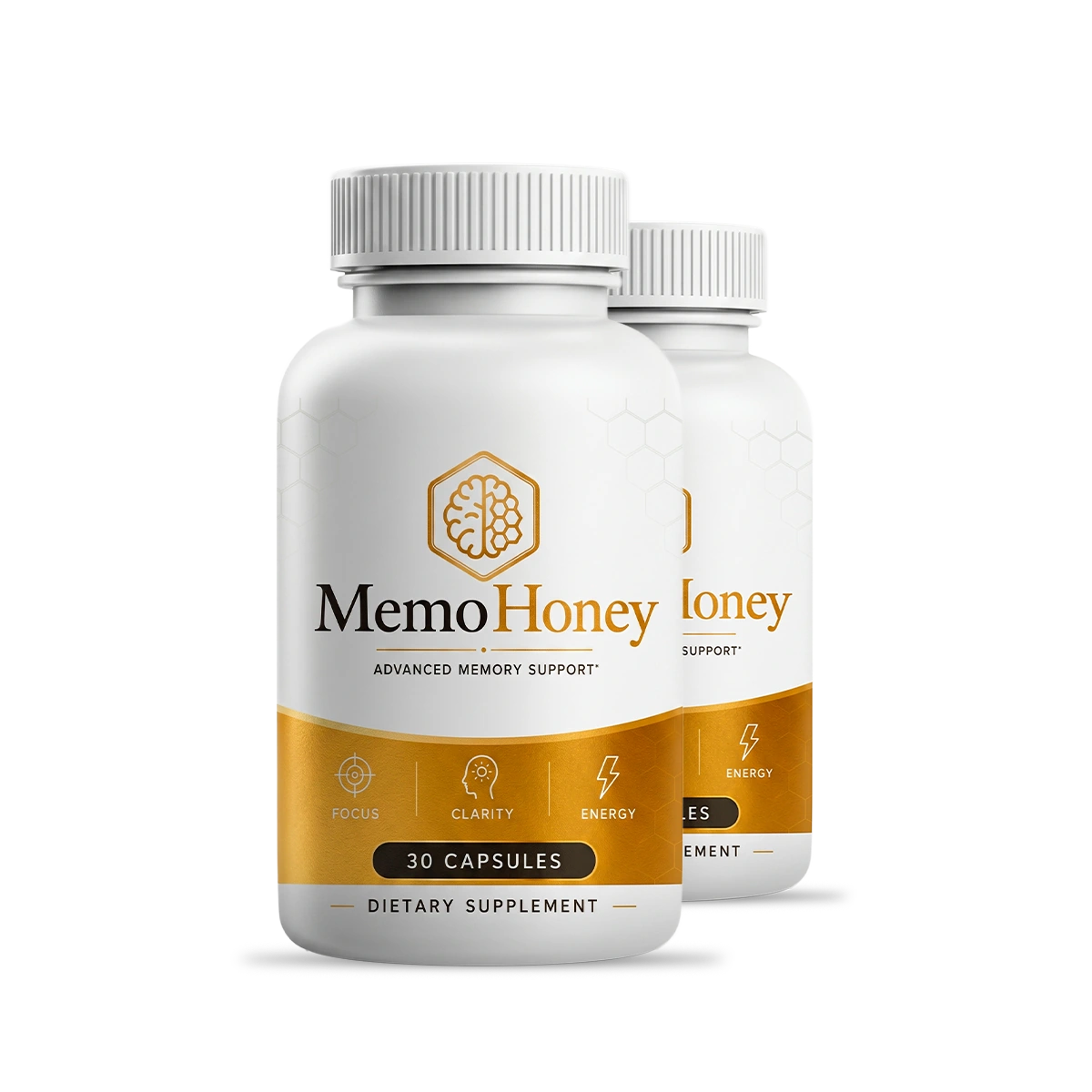
One capsule a morning, 30 to a bottle, and 60 days from purchase to reach your own conclusion.
Two bottles $158 · six bottles $294 · 60-day money-back guarantee
Order MemoHoney From This CounterLot MEM-26/ME-4192 · one a morning, 30 to a bottle · ships from the United States