MemoHoney Official Website › Articles › Reading a label
Reading a labelFocus, Clarity, Energy: What Three Words On A Gold Band Are Allowed To Mean
The front of this bottle carries seven lines of text and every one of them sits inside a regulatory category.
A dietary supplement may say that it supports a normal body function. It may not say that it treats, prevents or cures anything. The distance between those two phrasings is often a single word, and it is the whole of what a label is allowed to assert.
Three words, spaced across a gold band
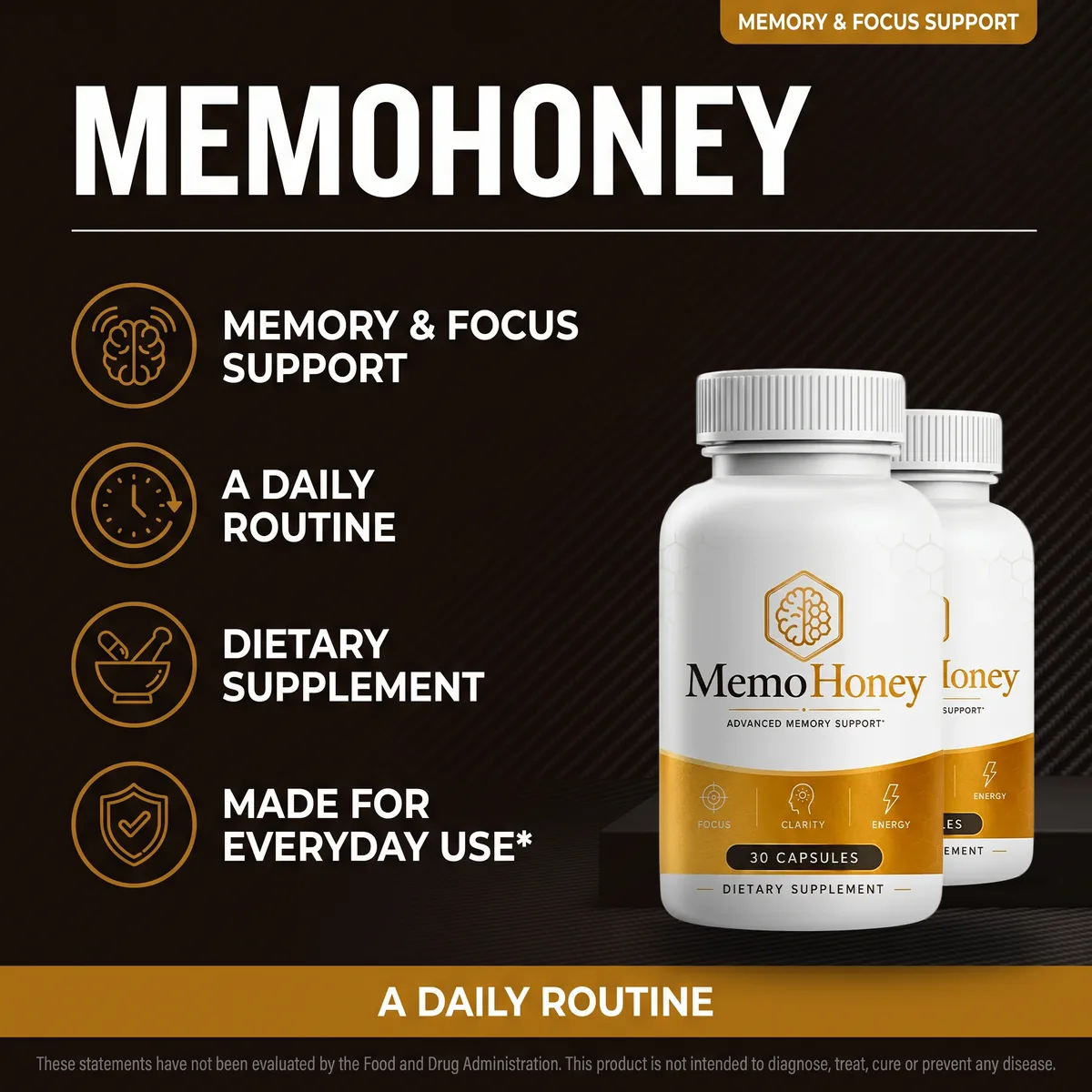
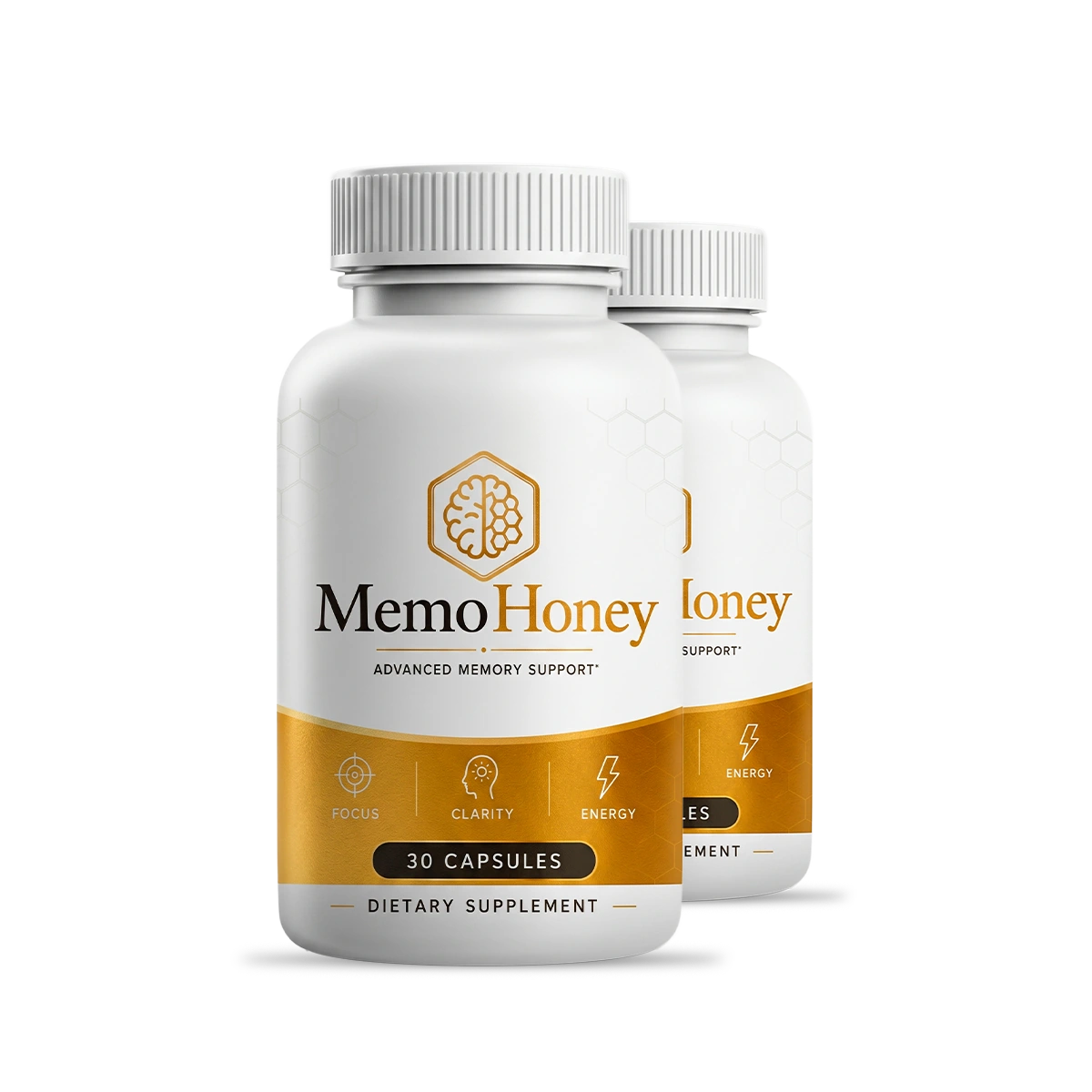
The front of this bottle carries seven lines of text and no more. The brand name. The phrase ADVANCED MEMORY SUPPORT. Three words across a gold band: FOCUS, CLARITY, ENERGY. Then 30 CAPSULES and DIETARY SUPPLEMENT.
That is the whole of what the container asserts. It is a short list and its brevity is not an accident: every one of those phrases sits inside a specific regulatory category, and a manufacturer that steps outside it has changed what the product legally is.
This article is about reading those words as the regulated statements they are, because once you can, the whole shelf becomes easier to navigate.
Treat what follows as reading about a dietary supplement, not as treatment advice. A memory change that other people have noticed, or one that has worsened steadily month on month, deserves an assessment rather than a purchase. MedlinePlus sets out what is worth reporting.
Two kinds of claim, and the line between them
A dietary supplement in the United States may make what are called structure and function claims. Those describe an effect on a normal structure or function of the body: supports, helps maintain, contributes to, promotes.
It may not make a disease claim. Treating, preventing, curing, diagnosing or mitigating a named condition is what a drug does, and a product making that claim is a drug for regulatory purposes whatever the label calls it.
The distance between the two phrasings is often a single word, which is why marketing copy in this category reads the way it does. The FDA publishes a plain-language page on the distinction and it is worth ten minutes before buying anything on this shelf.
| Phrase | Category | What it commits the seller to |
|---|---|---|
| Supports memory function | Structure and function | Very little. It describes an intention, not an outcome |
| Helps maintain healthy cognitive function | Structure and function | Also very little, and note the word healthy |
| Improves focus and concentration | Structure and function, at the edge | More than the first two. Improves implies a measurable change |
| Treats memory loss | Disease claim | Not permitted on a dietary supplement |
| Prevents cognitive decline | Disease claim | Not permitted on a dietary supplement |
| Reverses dementia | Disease claim | Not permitted, and not true of anything sold anywhere |
The first three appear routinely in this category. The last three appear on sales pages that have stopped caring, and they are a signal about the seller rather than about the formula.
What focus, clarity and energy are doing
Three single words on a band, with no verb attached to any of them. That is a deliberate construction and it is worth unpicking.
A single noun makes no assertion. FOCUS beside an icon is not a claim that the product improves focus; it is an association, and associations are the safest thing a label can print. The reader supplies the verb, and the manufacturer has committed to nothing.
ADVANCED MEMORY SUPPORT does slightly more work. Support is the structure and function verb of choice across the whole industry, precisely because it describes an intention rather than an outcome. Advanced is a marketing adjective with no definition at all.
None of this is improper. It is a label behaving, and a label that behaves is better than one that does not. What it is not is informative, and a buyer who wants to know what the product does has to look somewhere other than the front of the bottle.
What the seller's own page adds
The five longer statements on the seller's page are the same category of claim, stretched further. Each one is quoted in full on the benefits page with the nearest published work named beside it.
Two of the five are worth noticing here. “Protect the brain from oxidative stress” is a mechanism claim rather than an outcome claim, which is a different way of saying a great deal while committing to nothing measurable. “Optimize neurotransmitter production” is the same device: optimise has no threshold, so no result can fail to meet it.
Read the MemoHoney label while this is in front of you
Seven lines on the label panel, the amount each published trial used beside them, and 60 days from the date of purchase to decide.
Two bottles $158 · six bottles $294 · 60-day money-back guarantee
Order MemoHoney From This CounterLot MEM-26/ME-4192 · one a morning, 30 to a bottle · ships from the United States
The asterisk, and what it points at
ADVANCED MEMORY SUPPORT on this label carries a small asterisk. It always does, on every product in this category, and it points at one sentence: these statements have not been evaluated by the Food and Drug Administration, and this product is not intended to diagnose, treat, cure or prevent any disease.
That sentence is required. It is not a formality and it is not legal padding: it is the statement that makes a structure and function claim lawful in the first place. A label carrying the claim without the disclaimer has a problem.
What it means in practice is that nobody reviewed the claim before the bottle went on sale. The manufacturer is responsible for its truthfulness and the agency acts afterwards if it is not. That is a different system from the one people assume when they see an FDA-registered facility emblem beside the same product.
- Supports describes an intention. It commits the seller to nothing measurable
- Advanced has no definition. Treat it as decoration
- Clinically studied means an ingredient was studied, not that this product was
- FDA registered facility is a filing every US food plant makes. It is not approval
How to read the front of any bottle in ninety seconds
- Find the verb. Support, help, promote and contribute are structure and function verbs and commit to nothing
- Find the asterisk and read what it points at, which is always the same sentence
- Count the single nouns with no verb attached. Those are associations rather than claims
- Look for a disease word: treat, prevent, cure, reverse. Its presence says something about the seller
- Then turn the bottle round and look for the amounts, which is where the actual information lives
On this particular bottle the fifth step is worth the trouble. The Supplement Facts panel prints an amount for every line, seven lines where the advertising names six, and the ingredients page sets each amount beside the one its published trials used.
Five phrases on this shelf with no definition at all
Beyond the regulated claims there is a second vocabulary, and it is the one doing most of the persuading. None of these phrases has a legal definition for dietary supplements, which means none of them sets a standard a product could fail to meet.
| The phrase | What people hear | What it actually requires |
|---|---|---|
| Natural | Grown rather than synthesised, and therefore gentler | Nothing. It has no fixed legal meaning in this category |
| Advanced | A newer or better formula than the alternatives | Nothing. It is a comparative with no comparison attached |
| Clinically studied | This product was trialled | That an ingredient in it was studied somewhere, at some amount, in somebody |
| Doctor formulated | A named clinician stands behind it | That the seller says one was involved. Ask who, and when |
| Premium | Better raw material | Nothing at all |
Five phrases, five different ways of saying something while committing to nothing. All five appear routinely on this shelf.
Clinically studied is the one worth dwelling on
It is the most persuasive of the five because it sounds like a claim about evidence, and it is a claim about an ingredient rather than about a product.
An ingredient can be clinically studied at ten times the amount in the capsule, in a different population, for a different outcome, with a null result, and the phrase remains literally true. Every ingredient on this particular label has been clinically studied, and the largest trial in this whole category followed more than three thousand older adults on ginkgo across six years and came back with no reduction in dementia incidence at all. That is clinical study too.
The useful question is never whether an ingredient has been studied. It is what was studied, in whom, at what amount, and what happened.
The short version
- The front of the bottle carries seven lines and they are all structure and function statements or plain facts
- Support is the verb the whole industry uses because it describes an intention rather than an outcome
- Three single nouns on a band make no assertion at all, which is the safest construction available
- A disease claim would change what the product legally is, and none appears here
- The asterisk points at the sentence that makes the rest of it lawful
- None of this is improper, and none of it tells a buyer what is inside the capsule
- US Food and Drug Administration (fda.gov): “Questions and Answers on Dietary Supplements”.
- National Center for Complementary and Integrative Health, National Institutes of Health (nccih.nih.gov): “Using Dietary Supplements Wisely”.
- MedlinePlus, US National Library of Medicine (medlineplus.gov): “Memory”.
- Clin Toxicol (Phila) (2022) 60(10):1156-1158: “The unapproved drug centrophenoxine (meclofenoxate) in cognitive enhancement dietary supplements”, by Cohen PA, Avula B, Khan I, PubMed 35959800.
- JAMA (2008) 300(19):2253-62: “Ginkgo biloba for prevention of dementia: a randomized controlled trial”, by DeKosky ST, Williamson JD, Fitzpatrick AL, et al, PubMed 19017911.